SHOT/CHASER: Trump Leaves Americans Vulnerable to Energy Shocks As His War of Choice Sends Costs Through the Roof
tags
Trump vowed to have no windfarms built under his watch, even though they would have brought energy onto the grid and lowered utility bills during an energy affordability crisis
Trump has taken enough clean energy to power more than 14 million homes off the grid as demand soars
Washington, DC — Trump’s war of choice in Iran is sending oil, diesel and jet fuel prices skyrocketing, but instead of investing in homegrown clean energy, Trump would rather spend a billion taxpayer dollars to stop the construction of clean energy projects that protect Americans from global oil shocks. Americans are already footing the bill for Trump’s war in Iran, with gas prices increasing 27%, the fastest four-week increase since Hurricane Katrina in 2005.
Trump and Republicans have taken clean energy options off the grid as demand from data centers surges, sending utility costs skyrocketing during an energy affordability crisis. A report from the Federal Reserve Bank of Dallas found that Trump’s crusade to block wind and solar power could nearly double the rate hikes and broader inflation from data center buildout.
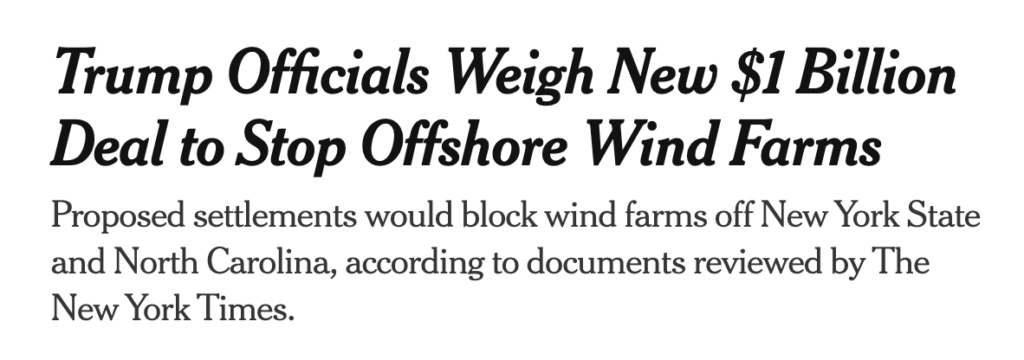
SHOT: Trump is willing to spend a billion taxpayer dollars to escalate his vendetta against offshore wind, even though it will increase electricity prices for America’s families.
The New York Times: Trump Officials Weigh New $1 Billion Deal to Stop Offshore Wind Farms
CHASER: As Trump takes energy options off the grid, sending utility bills through the roof, his war in Iran is creating a global energy crisis that will make everything from groceries to plane tickets more expensive.
Fox Business: How the Iran war could hit Americans’ grocery bills
Inside Climate News: The Iran War Is Making the Case for Renewable Energy, Experts Argue
Newsweek: American Farmers Dealt New Blow as Trump’s Iran War Escalates